
Sicilian
Arancini
DiGrazzi
Frozen on Purpose, Not as a Shortcut
Scroll down
To read
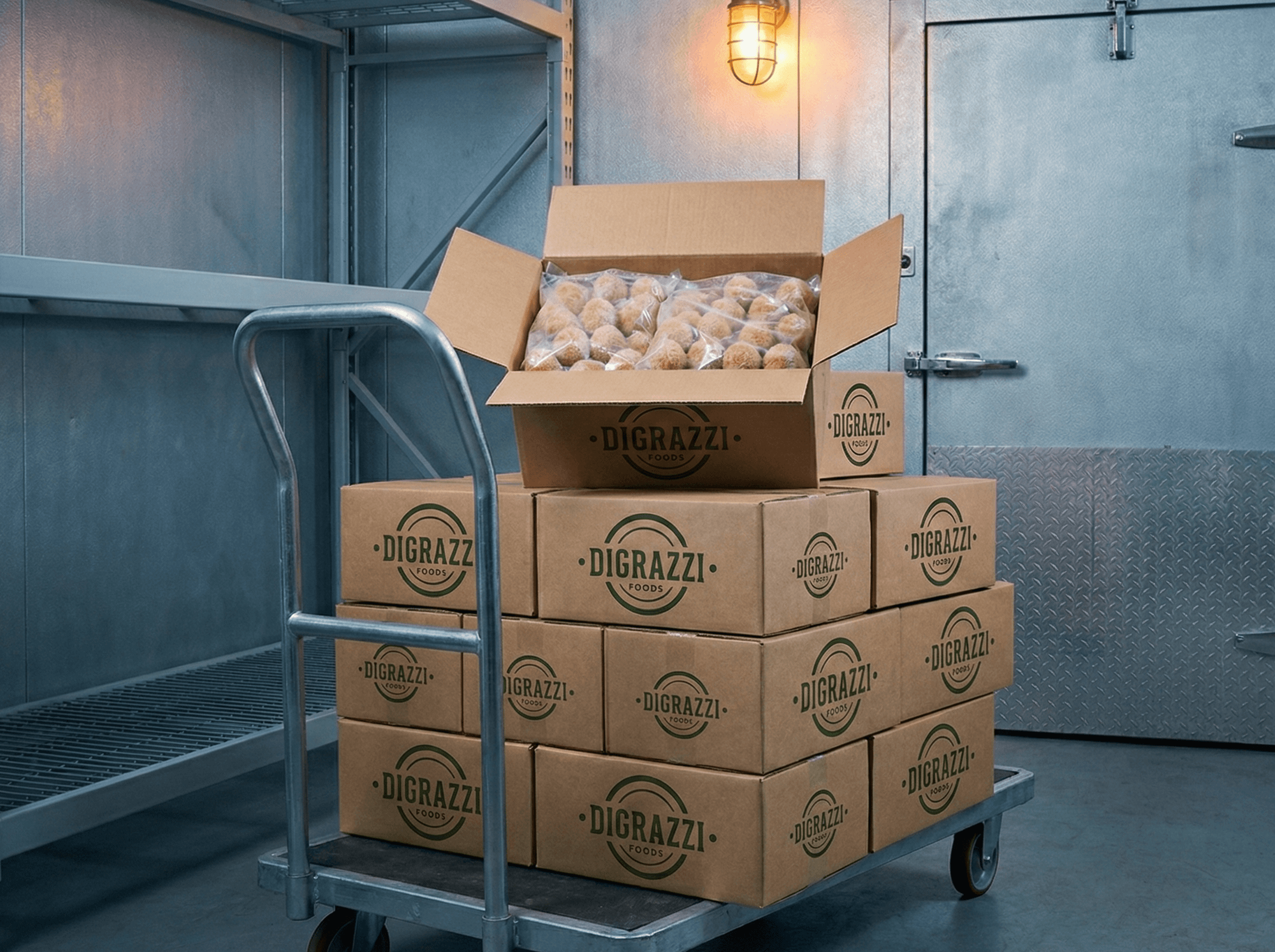
Why freezing is part of the recipe
“Frozen” has a bad reputation in food, mostly because it’s often used to hide shortcuts. With our arancini, it’s the opposite. Freezing is a deliberate step in the build: it locks in structure, protects the filling, and makes sure every piece behaves the same way from our kitchen to yours.
Locking in structure and flavor
Once each arancino is shaped and coated, we freeze it at peak condition. This stabilizes the rice, keeps the filling exactly where it should be, and preserves moisture without letting it wander. The result is a product that fries evenly, stays crisp on the outside, and stays creamy in the center—whether you cook it tomorrow or next month.
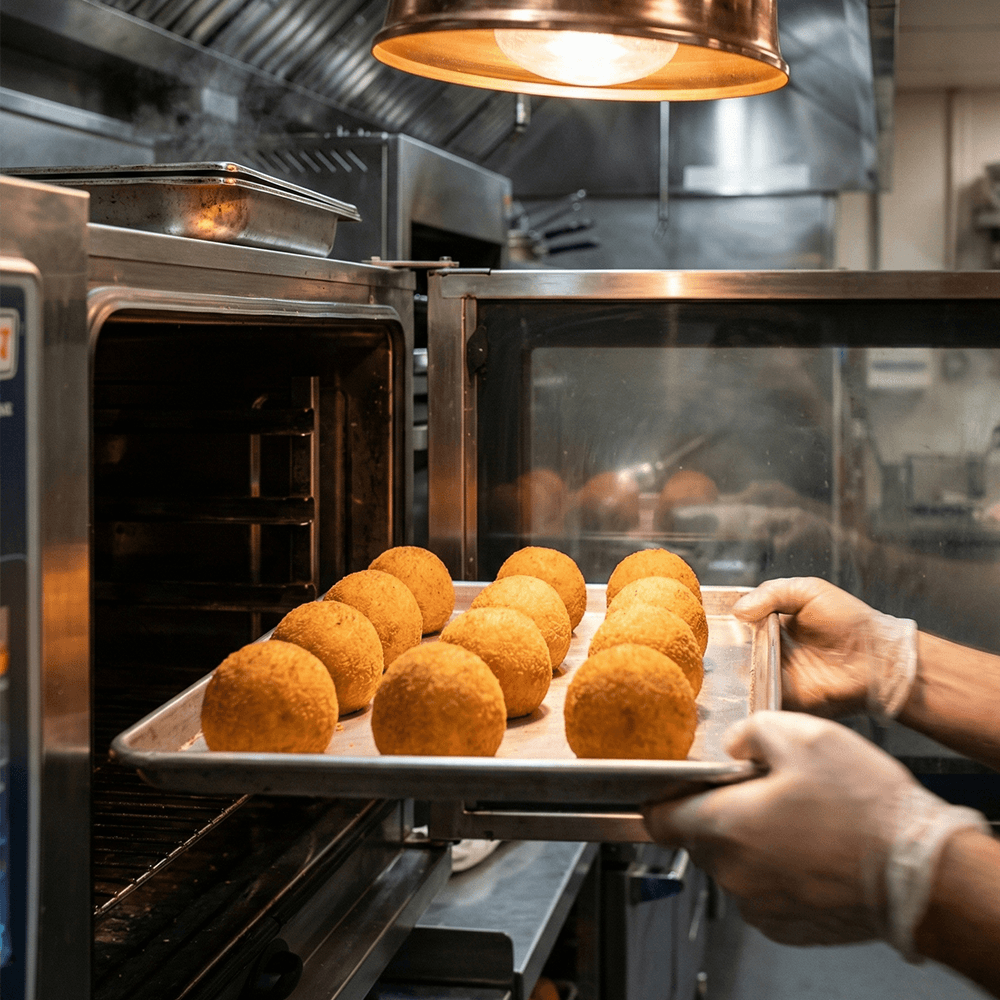
Reliability in every case
For a busy service, frozen doesn’t mean “less fresh.” It means “ready when you are.” You can pull only what you need, when you need it, without worrying about waste, drip, or inconsistency from batch to batch. Every case carries the same weight, the same size, the same performance on the line.
Built for real-world handling
Back doors, walk-ins, shift changes—real kitchens aren’t gentle. Frozen arancini are more resilient to the bumps and pauses of everyday operation. They handle transport, storage, and restaging without collapsing or drying out, as long as the cold chain is respected.
Freedom for your team
When the base product is frozen by design, your team gets more control: you decide the pace, the volume, and the finish. Fire straight from frozen, or stage and hold to match your workflow. We handle the quiet engineering beforehand so your crew can focus on seasoning, plating, and the guest in front of the plate.